Rust Removal in San Antonio, TX
Treat orange irrigation and battery rust stains on concrete, pavers and siding.
Removing Orange Rust Stains From Concrete, Pavers and Siding
Most rust stains in San Antonio come from iron-rich irrigation or well water, fertilizer granules, and battery acid or metal furniture left on concrete. The iron settles into the pores of the surface, so pressure washing alone won’t lift it.
We use a rust remover chosen for your surface, protect your landscaping, and give you a free itemized quote. Most stains fade dramatically, while very old or deep stains can leave a faint shadow, and we’ll tell you which to expect before we start.
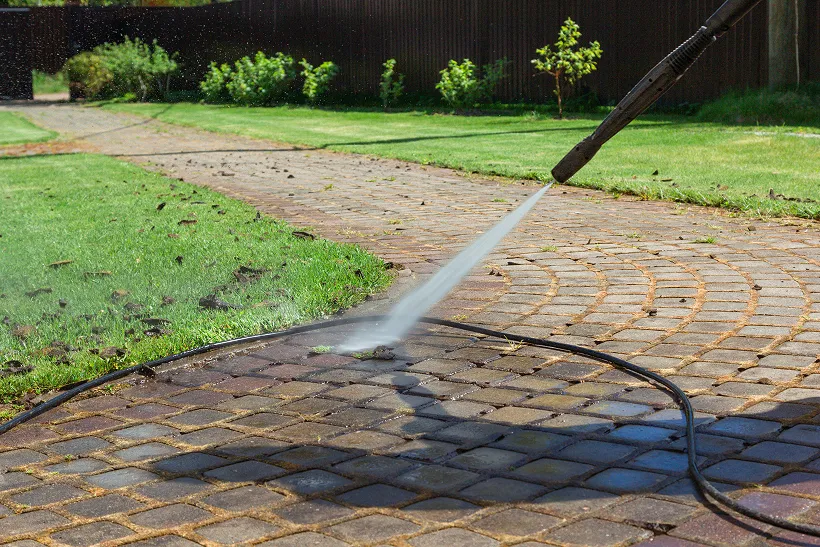
What’s Included In Our Rust Removal
We treat rust wherever it shows up around your home or property.
- 01
Irrigation and well-water stains
Orange sprinkler lines and overspray marks on driveways, walks, curbs and walls.
- 02
Fertilizer and battery acid spots
The dotted rust left by fertilizer granules, and battery stains in garages and on driveways.
- 03
Pavers, stone and siding
The rust remover and its strength are chosen for each surface, including stucco, brick and vinyl siding.
- 04
Landscape and drain protection
Plants are pre-wet and rinsed, and runoff is controlled while the remover is working.
Our Rust Removal Process
Rust removal is chemistry, not pressure, so each step is about getting the remover to work safely.
Step 01
Inspect and test
We identify the source of the stain and the surface, and test a small area on colored, stamped or sealed concrete.
Step 02
Pre-clean the surface
Dirt is washed off first so the rust remover can reach the stain.
Step 03
Apply the rust remover
A remover suited to the surface is applied and left to work, with a second application on heavy stains.
Step 04
Controlled rinse and review
The area is rinsed at low pressure to avoid etching or rings, and we walk through the results and prevention tips with you.
Why Pressure Washing and Bleach Won’t Remove Rust
- Rust is iron oxide bonded into the pores of concrete and stone; water pressure moves dirt, not chemically bonded iron.
- Turning up the pressure etches the surface and can leave permanent marks without removing the stain.
- Bleach doesn’t dissolve rust and can make some stains harder to remove, and it should never be mixed with acid-based cleaners.
- A rust remover dissolves the iron oxide so it can be rinsed away.
Keeping Rust Stains From Coming Back
- Adjust sprinkler heads so they water the lawn, not the driveway or walls.
- If you’re on well water, ask an irrigation professional about an iron filter.
- Sweep fertilizer granules off concrete before watering or rain.
- Keep metal furniture and planters off bare concrete, or set them on pads.
Rust Removal Near You
We provide rust removal across San Antonio and these nearby cities.
Rust Removal FAQ
Get clear answers about our pressure washing services, pricing, preparation, and what to expect when you choose Power Washing San Antonio.
Need a Quote?
Can you remove all rust stains?
Most rust stains fade dramatically. Very old or deep stains, or areas already etched by pressure washing, can leave a faint shadow, and we’ll tell you what to expect after we look at them.
Why didn’t pressure washing or bleach work?
Rust is iron bonded into the surface. Pressure can’t break that bond, and bleach doesn’t dissolve rust. It takes a rust remover that dissolves the iron so it rinses away.
What causes orange stains on my driveway?
Usually iron in irrigation or well water, fertilizer granules, battery acid or metal objects left on the concrete.
Is rust removal safe for my plants and pets?
We pre-wet and rinse your plants, control runoff, and ask that pets stay inside while we work.
Will the stains come back?
Only if the source continues. If sprinklers keep hitting the concrete with iron-rich water, new stains will form, so fixing the overspray is the best prevention.
Can you remove rust from siding or pavers?
Yes. The method and product are chosen for each surface, and we test a small spot first.